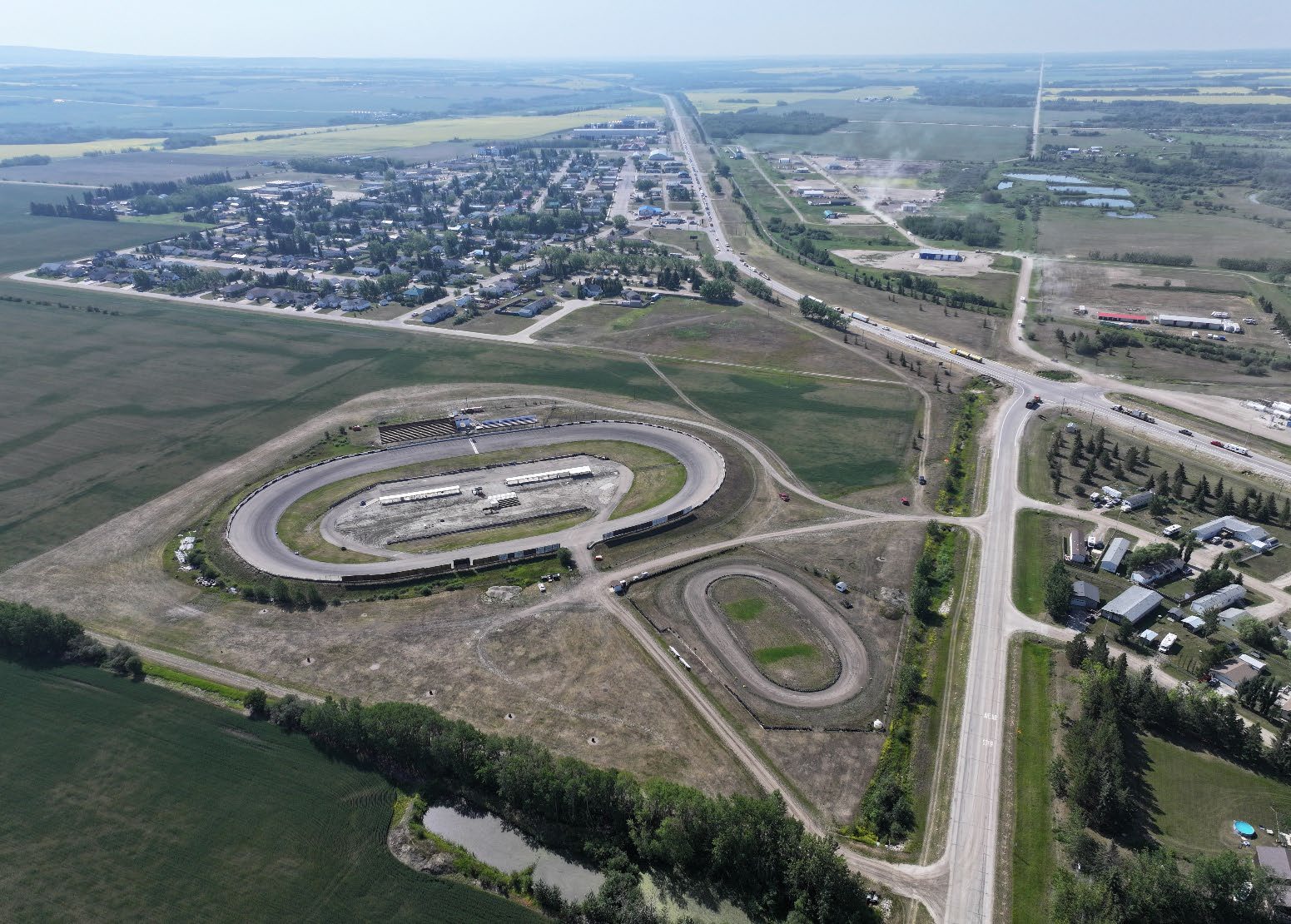
The County of Grande Prairie is proposing to integrate the Hamlet of Hythe into the County’s Land Use Bylaw. This change will ensure consistent planning and development regulations across the entire County, improve efficiency in application reviews, and provide greater clarity for residents and developers.
Community input is a key part of this process so, we invite residents and developers to review the proposed changes and share feedback during the public consultation period.
Background
The former Village of Hythe was dissolved and became part of the County of Grande Prairie on July 1, 2021. Since then, planning applications within the Hamlet of Hythe have continued to be reviewed under the Village of Hythe Land Use Bylaw (LUB).
This has led to inconsistencies in how development proposals are reviewed and decided upon compared to the rest of the County. In some cases, applications that would otherwise be permitted under the County’s Land Use Bylaw needed referral to the Municipal Planning Commission (MPC) because the uses or standards are not addressed in the former Village bylaw.
Purpose of the Zoning Integration
The proposed changes will integrate all Hythe properties into the County’s current LUB under similar zoning to what each property has now.
This change will:
Ensure consistent planning regulations across the County
Streamline development approvals and reduce processing delays
Enhance transparency and clarity for applicants and planners
Simplify administration and long-term planning alignment
What does this mean for residents?
Properties will still have the same zoned uses and nearly identical site standards. There are also no changes to property taxes. The way residents and property owners use their properties does not change.
District Redesignations
Restricted Residential (R-1) Districts to Rural Residential (RR-2) District.
Residential-General (R-G) Districts to Rural Residential Mixed (RR-4) District.
Manufactured Home Subdivision (MHS) Districts to Manufactured Home Community (MHC) District.
Primary Commercial (C-1) Districts to General Commercial (GC) District.
Commercial (C-2) Districts to Comprehensive Commercial (CC) District.
General Industrial (M-1) Districts to Rural Medium Industrial (RM-2) District.
Institutional (I) Districts to Limited Institutional and Recreation (L-IR) District.
Agricultural (Ag) District to Urban Reserve (UR) District.
Pt. NE-13-73-11-W6; Plan 0120240; ;A2 Lot from Urban Reserve (UR) to Country Residential (CR-5) District.
Pt. SE-23-73-11-W6; Plan 8120869; Block 1; Lot 31 from Manufactured Home Subdivision (MHS) Districts to Country Residential (CR-2) District.
Bylaw #2680-26-015 Approved by Council
On April 13, 2026, Council approved Bylaw #2680-26-015 to integrate the properties in the Hamlet of Hythe into the County Land Use Bylaw
The County of Grande Prairie is proposing to integrate the Hamlet of Hythe into the County’s Land Use Bylaw. This change will ensure consistent planning and development regulations across the entire County, improve efficiency in application reviews, and provide greater clarity for residents and developers.
Community input is a key part of this process so, we invite residents and developers to review the proposed changes and share feedback during the public consultation period.
Background
The former Village of Hythe was dissolved and became part of the County of Grande Prairie on July 1, 2021. Since then, planning applications within the Hamlet of Hythe have continued to be reviewed under the Village of Hythe Land Use Bylaw (LUB).
This has led to inconsistencies in how development proposals are reviewed and decided upon compared to the rest of the County. In some cases, applications that would otherwise be permitted under the County’s Land Use Bylaw needed referral to the Municipal Planning Commission (MPC) because the uses or standards are not addressed in the former Village bylaw.
Purpose of the Zoning Integration
The proposed changes will integrate all Hythe properties into the County’s current LUB under similar zoning to what each property has now.
This change will:
Ensure consistent planning regulations across the County
Streamline development approvals and reduce processing delays
Enhance transparency and clarity for applicants and planners
Simplify administration and long-term planning alignment
What does this mean for residents?
Properties will still have the same zoned uses and nearly identical site standards. There are also no changes to property taxes. The way residents and property owners use their properties does not change.
District Redesignations
Restricted Residential (R-1) Districts to Rural Residential (RR-2) District.
Residential-General (R-G) Districts to Rural Residential Mixed (RR-4) District.
Manufactured Home Subdivision (MHS) Districts to Manufactured Home Community (MHC) District.
Primary Commercial (C-1) Districts to General Commercial (GC) District.
Commercial (C-2) Districts to Comprehensive Commercial (CC) District.
General Industrial (M-1) Districts to Rural Medium Industrial (RM-2) District.
Institutional (I) Districts to Limited Institutional and Recreation (L-IR) District.
Agricultural (Ag) District to Urban Reserve (UR) District.
Pt. NE-13-73-11-W6; Plan 0120240; ;A2 Lot from Urban Reserve (UR) to Country Residential (CR-5) District.
Pt. SE-23-73-11-W6; Plan 8120869; Block 1; Lot 31 from Manufactured Home Subdivision (MHS) Districts to Country Residential (CR-2) District.
Friday, January 23, 2026 Drop in between 6:00 p.m. to 8:00 p.m. Hythe Community Centre, 10108 104 Ave, Hythe
Revisions to Proposed Rezoning
Hythe Rezoning has finished this stage
Based on comments received from the Open House, administration is reviewing the proposed rezoning and making drafts
Complete draft and formal referral
Hythe Rezoning has finished this stage
Complete draft of the proposed rezoning has been developed. Formal referral to landowners and relevant agencies to proceed.
Public Hearing of Bylaw #2680-26-015 is scheduled for April 13, 2026 at 1:00 pm
Hythe Rezoning has finished this stage
A formal Public Hearing on the proposed rezoning is scheduled with County Council for April 13, 2026 at 1:00 pm.
Council Meetings are open to the public and are live streamed through the County’s Council Meeting Portal. Information on how to view the meeting is available at: